The Coin Is a Cop-Out: How to Read Your Tyres Properly Before Winter Gets a Grip
Photo: Shixart1985, CC BY 2.0, via Wikimedia Commons
The 20p test has become a British motoring ritual. You fish a coin out of your pocket, poke it into a tread groove, squint at the rim, and feel reassured. Job done. Except it is not job done. By the time the wet leaves are mulching themselves into the road surface, a single coin check in a single groove is about as thorough as kicking the tyres and calling it a service.
None of this is a dig at the 20p trick. It is quick, free, and better than nothing. But as winter arrives, you need to read the whole tyre, not just one line of it.
What the 20p test actually tells you
The idea is simple: the outer band of a 20p coin is roughly 1.6mm deep. Push the coin into a main tread groove and, if that band sits proud of the tread, you are at or below the legal limit. That makes it a useful emergency check. It is not a detailed diagnosis.
The coin cannot tell you whether the tyre is wearing evenly across its width. It cannot tell you whether one shoulder is scrubbing away faster than the rest. It cannot tell you that wet grip has been fading since well before the legal minimum. And it cannot tell you whether the rubber is cracking, perished, or simply old. A tyre can pass the coin test and still be a poor choice for a wet November morning.
The law, the MOT, and the bit most drivers miss
In the UK, car tyres need at least 1.6mm of tread across the central three-quarters of the tyre, around the entire circumference. Below that, you are looking at an MOT failure, potential points on your licence, and a very uncomfortable conversation if the weather turns.
But legal is not the same as capable. The 1.6mm figure is a minimum, not a target. Wet braking performance drops off before you reach it, especially on standing water and greasy leaf litter. That is why many tyre fitters and road safety bodies suggest thinking seriously about replacement once tread gets down to around 3mm. It is not a legal deadline. It is a sensible warning line.
Why 3mm matters more in November
Summer tyres can cope with a lot, but they need somewhere for the water to go. Tread grooves clear water away from the contact patch. As they shallow out, the tyre has to work harder to avoid floating, and that is when stopping distances start stretching.
Add wet leaves to the mix and the road becomes a slippery, composty carpet. Leaves hold moisture against the surface and reduce the texture your tyre is trying to key into. A tyre with 2mm of tread may still be legal, but it has far less margin for error than one with 4mm. In stop-start traffic on a damp A-road, that margin is the whole game.
Read across the tyre, not just one groove
A proper check takes a few minutes and a cheap tread depth gauge. You can get one for less than the price of a coffee, and it will tell you far more than a coin.
Measure at three points across the width of the tyre: the inner edge, the centre, and the outer edge. Do this at three places around the circumference, roughly 120 degrees apart. Write the numbers down if you are the organised sort. The pattern matters as much as the lowest reading.
Centre wear
If the middle is worn but the edges are healthy, the tyre has likely been running overinflated. It may also be doing a lot of motorway miles with a light load. Check pressures when the tyres are cold and set them to the car maker's figures, not the maximum on the sidewall.
Both edges worn
Worn outer and inner edges with a healthier centre usually points to underinflation. The tyre bulges slightly and runs on its shoulders. It is worth checking pressures regularly, especially as temperatures drop, because tyre pressure falls with the cold.
One edge worn
If one side is wearing noticeably faster, suspect alignment. Kerbs, potholes, and the general state of some UK roads can knock things out of true. A wheel alignment check is cheaper than a new pair of tyres.
Feathered or scalloped wear
Feathering across the tread blocks or patchy scalloping can point to suspension wear, worn bushes, or alignment issues. It can also make the tyre noisy and less predictable. Get a garage to look at it rather than simply swapping the tyre and hoping.
When to rotate, and when to replace
Rotation is a useful habit if your tyres are wearing evenly and still have plenty of tread. Swapping front to rear can spread the load, particularly on a front-wheel-drive car where the front tyres do the steering and most of the braking. Check your handbook first, though. Directional tyres have to stay on the correct side, and some cars have different sizes front and rear.
Rotation is not a rescue plan for a tyre that is already below 3mm, unevenly worn, or damaged. Moving a tired tyre to the back does not make it young again. If the tread is low, the wear is lopsided, or the sidewall is cracked, replacement is the honest answer.
Look at the sidewall while you are there
Tread gets all the attention, but the sidewall is where trouble often shows itself. Look for cuts, bulges, and cracking. A bulge means internal damage and the tyre should come off the road. Cracking can be age-related, even if the tread looks decent.
Check the DOT code on the sidewall. The last four digits give the week and year of manufacture. A tyre that is many years old may still have tread, but rubber hardens and deteriorates with time. If yours is getting on a bit, have it inspected by a professional, especially before a cold snap.
The five-minute November routine
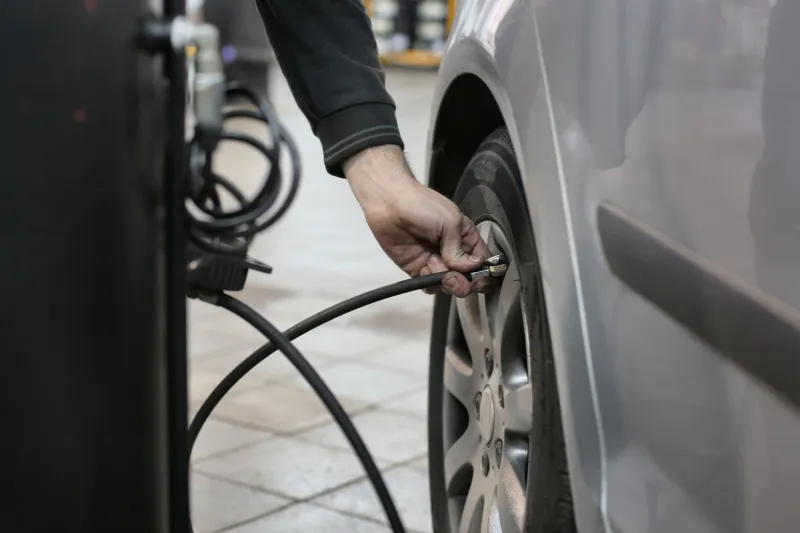
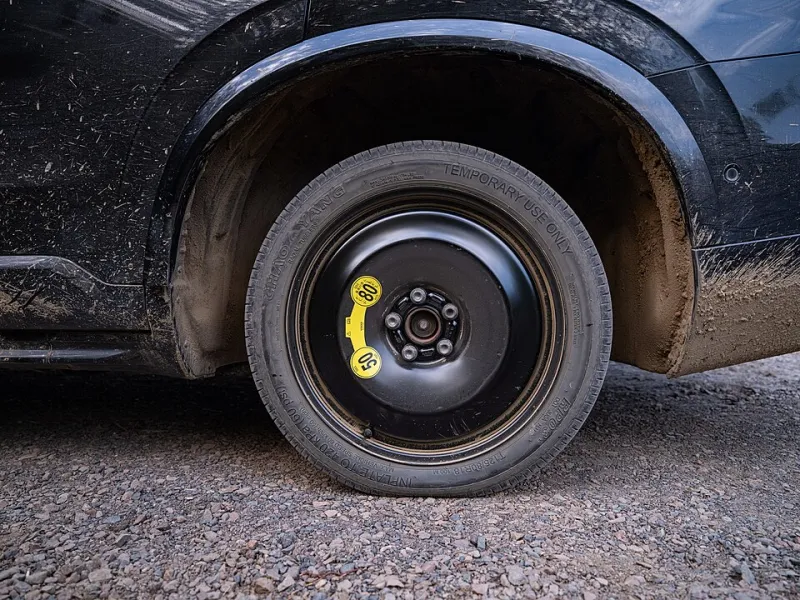
Keep a tread gauge and a small torch in the boot. On a dry day, check each tyre at three points across the width and three points around the circumference. Check the pressures cold, including the spare if you have one. Look at the sidewalls. Look for nails, cuts, and uneven patches. Then set a reminder to do it again in a month.
The 20p coin is not the enemy. It is just a blunt instrument. Treat it as a first glance, not a full diagnosis. Your tyres are the only four things connecting you to the road, and in a British winter, that road is going to be wet, leafy, salty, and occasionally full of surprises. Give them a proper read before the weather does it for you.