The Wall Test, the Haze and the Glare: Giving Your Headlights a Proper November Once-Over
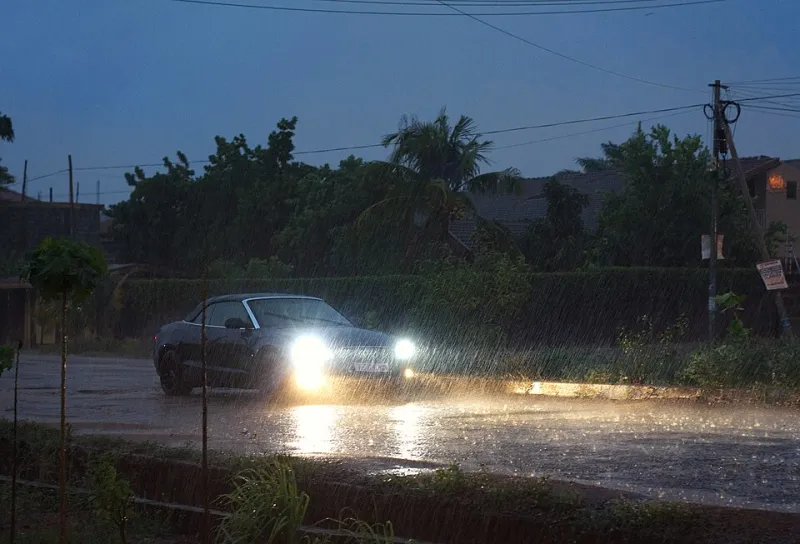
Photo: Kwameghana(Bright Kwame Ayisi), CC BY-SA 4.0, via Wikimedia Commons
There's a particular kind of November morning where you leave the house in gloom, drive to work in gloom, and arrive just as the sky gives up entirely. Your headlights stop being a background detail and become the main event. And yet most of us give them roughly the same attention we give the air pressure in the spare tyre: a vague sense that it's probably fine.
It usually isn't. Not badly wrong, necessarily — just tired. A lens that's gone milky, a beam pointing a degree or two too high, a bulb that's been quietly dimming since the last time you thought about it. None of these announce themselves with a warning light. They just make the drive home a little more stressful than it needs to be.
The good news is that a proper headlight audit takes about ten minutes on a dry driveway. You don't need a workshop, a code reader or a mysteriously expensive diagnostic session. You need a flat wall, a tape measure, a cloth and a slightly ruthless eye.
Start with the wall, not the bulb
Park facing a plain wall on level ground, about five metres back. Give the car a bounce to settle the suspension. Turn on the dipped beam and look at what's actually landing on the wall.
You're looking for two things: height and shape. The top edge of each beam should sit slightly below the centre of the headlight itself — a gentle downward tilt, not a searchlight sweeping the rooftops. The two cut-offs should be broadly level with each other. If one side is noticeably higher, or if the pattern looks like a smear rather than a defined shape, the aim is off.
This matters more than people think. A beam aimed too high gives you a lovely view of the treetops and gives the driver coming the other way a face full of glare. A beam aimed too low cuts your usable distance and makes you feel like you're driving by candlelight. Neither is a great look.
If the aim is out, many cars have adjusters under the bonnet — usually a white or grey screw or hex fitting near the back of the lamp unit. But if you're not confident, don't guess. A garage can set the aim properly in minutes, and an MOT tester will check it anyway.
Cloudy lenses: the light you're paying for and not getting
Polycarbonate headlight lenses are brilliant until they're not. UV exposure, road grit and a hundred rounds of supermarket jet wash gradually break down the protective coating, leaving that familiar yellow-grey haze. It looks cosmetic. It isn't.
A cloudy lens scatters light instead of focusing it. You lose usable output, the beam pattern goes fuzzy, and the whole assembly starts to look like it's been smoking twenty a day. In serious cases, an MOT tester can flag it if the light output is obviously reduced or the lens is obscuring the beam.
A proper restoration kit — the ones with graded wet-and-dry papers, a polishing compound and a UV sealant — will make a real difference if the haze is on the surface. Work in shade, keep the paper wet, and don't go at it like you're sanding a fence. Finish with a sealant, or the haze will be back by spring. Toothpaste is a popular driveway bodge and it can shift light surface film, but it won't last and it won't fix deeper degradation.
Check for condensation too. A light mist that clears is usually harmless. Actual droplets pooling behind the lens suggest a seal has gone, and that's a job for someone who knows what they're doing.
The bulb that's 'fine' and the reflector that isn't
Halogen bulbs don't fail dramatically. They fade. The filament slowly burns off material, the output drops, and the colour shifts from crisp white-ish to a tired yellow. You don't notice because it happens over months. Then you fit a new bulb on one side and suddenly the car looks like it's winking.
Replace halogen bulbs in pairs. It's cheap, it keeps the beam balanced, and it saves you doing the awkward second one in a car park in January. Don't touch the glass of a new halogen bulb with bare fingers — the oils can create hot spots and shorten its life.
While you're in there, look at the reflector bowl behind the bulb. If it's dull, cloudy or flaking, a new bulb won't fix much. The reflector is what actually throws the light down the road. Once it's gone, the unit is usually a replacement job rather than a repair.
And if you've got LED headlights from the factory, don't assume they're immortal. They last well, but the electronics behind them can fail, and some units are sealed. A flicker or a dark patch is worth investigating sooner rather than later.
Aim, dazzle and the legal line
Here's where a lot of well-meaning drivers wander into trouble. Fitting an aftermarket LED or HID kit to a halogen headlight feels like an upgrade — brighter, whiter, more modern. But the law and the MOT aren't sentimental about good intentions.
Headlamps have to meet construction and use requirements, and the beam pattern has to be right. Dropping an LED bulb into a housing designed for a halogen filament often scatters light in ways the reflector was never meant to handle. The result can be a beam that looks bright to you and blinding to everyone else. That's not just annoying; dazzle is an offence, and it's a common reason for an MOT failure or a roadside conversation.
HID conversions have their own rules around type approval, self-levelling and washers, depending on the setup. The short version: if a kit isn't properly approved for your car and doesn't produce a correct beam pattern, it's not a sensible road modification. If you're tempted, check with a reputable specialist and tell your insurer. A cheap eBay kit is not the place to discover the finer points of lighting regulations.
A quick five-point driveway check
- Park facing a wall and check the dipped beam height and shape.
- Wipe the lenses clean, then look again — haze is easier to spot on a clean surface.
- Check both bulbs for colour match and output. If one looks tired, do both.
- Look for condensation, cracks or a reflector that's gone dull.
- Switch on main beam, indicators and fog lights, and walk around the car to confirm everything is doing its job.
None of this is glamorous. It won't make your car faster, shinier or more desirable on the school run. But it will make the dark commute feel a lot less like a leap of faith. And in November, that's worth ten minutes on the driveway.