The Boot's Forgotten Fifth Wheel: Giving Your Spare Tyre a Proper Look Before It Matters
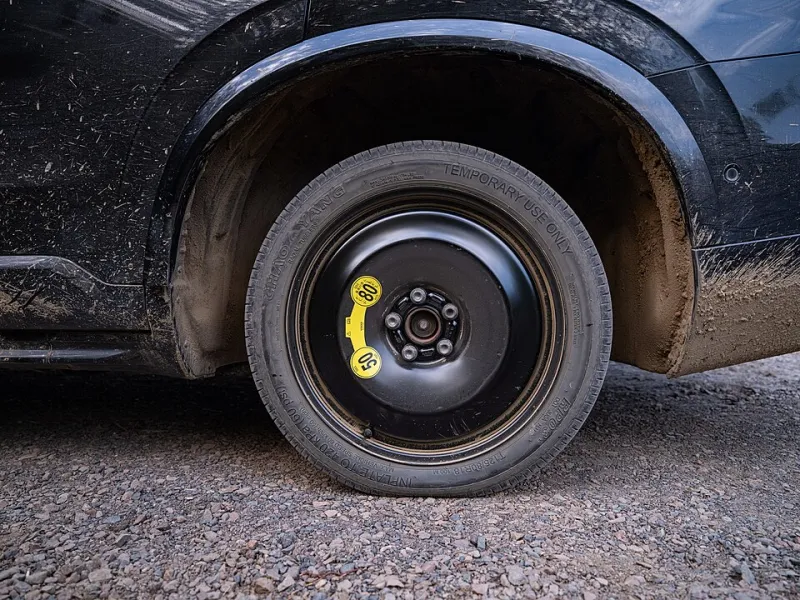
Photo: Tony Webster from Minneapolis, Minnesota, United States, CC BY-SA 2.0, via Wikimedia Commons
Most of us treat the spare wheel like a smoke alarm: we are glad it exists, but we do not test it until the house is filling with smoke. In the UK, that moment tends to arrive on a wet hard shoulder, in the dark, with a text message saying the recovery truck is two hours away. A spare tyre is not a lucky charm. It is a piece of rubber and steel that ages, loses pressure and quietly gives up while you are doing the weekly shop.
Meet the tyre you never think about
If you drive a modern hatchback, crossover or estate, your spare is probably a space-saver: a skinny wheel in a bright colour, tucked under the boot floor. Some cars carry a full-size spare, some carry a can of sealant and a compressor, and a few carry nothing at all beyond a polite suggestion that you call someone. Whatever the arrangement, it deserves more than a glance when you clean out the boot.
The first job is simply to find it. Lift the boot floor, remove the foam tray or the shopping bags, and check what is actually there. Is there a wheel, a jack, a wheel brace, and, if your car uses them, a locking wheel nut key? A spare without tools is a heavy paperweight. A jack without a handle is a puzzle. And a locking key left on the driveway at home is the sort of detail that turns a puncture into a recovery job.
What a space-saver is actually for
A space-saver is not a normal tyre. It is a get-you-home device, designed to be smaller, lighter and cheaper than the wheel it replaces. That is why the handbook usually limits you to around 50mph and roughly 50 miles. Those numbers are not a challenge. They are a ceiling. Drive more gently than you would on a full-size tyre, avoid harsh braking, and do not tow a trailer or caravan on one. If you can reach a garage sooner, do.
The restrictions also mean you should not leave a space-saver on for a fortnight because the weather is grim and the queue at the tyre place is long. It is a temporary fix, not a lifestyle choice. Book the replacement tyre, keep the speed down, and remember that handling will feel different, especially in wind and rain. A skinny tyre has less rubber on the road, and British B-roads are not always sympathetic.
The 50/50 rule is not a suggestion
Every space-saver has a maximum speed and distance, and they are usually lower than you think. Some are rated to 50mph, some to 80km/h, and the distance limit varies by manufacturer. Check the handbook or the sticker on the wheel itself rather than trusting a vague memory from a forum. The same goes for tyre pressure: space-savers often need a much higher pressure than the road tyres, sometimes around 60psi. That figure is in the handbook, on the door pillar or inside the fuel flap. If you have never checked it, today is a good day.
A space-saver that has been sitting at 20psi for three years is not much help. It may look fine because it is hidden, but rubber loses pressure over time, and a soft tyre on a hard shoulder is a bad start to a bad evening.
Age beats tread in the boot
Tread depth matters, but in the boot, age is the quieter problem. Tyres carry a DOT code: four digits, with the first two showing the week of manufacture and the last two the year. A code ending in 18 means the tyre was made in 2018. Rubber compounds harden and sidewalls crack over time, even if the tyre has never turned a wheel. Many manufacturers suggest replacing tyres at around six to ten years old, regardless of tread, and a spare that has been in the car since new may be well past its best.
Look for cracks in the sidewall, a shiny or glazed surface, bulges, or deep splits near the rim. Check the tread as well, but do not assume a deep tread means a healthy tyre. If the spare is older than the car's last few services, or you cannot remember ever checking it, treat it as a candidate for replacement. A new space-saver is not expensive compared with the cost of a failed roadside change.
The five-minute boot audit
Set a timer and do this before the next long drive. First, check the spare's pressure and adjust it to the handbook figure. Second, inspect the sidewall and tread for cracks, bulges or embedded objects. Third, confirm the jack, wheel brace and locking key are present and fit the car. Fourth, check the wheel well for water, leaves or corrosion; a damp spare wheel can rust and smell. Fifth, read the DOT code and note the age. Finally, make sure you know where the jacking points are, because discovering them in the rain is no fun.
While you are there, check that the wheel brace actually fits the wheel nuts. Some cars have a different size for the locking nut, and some owners discover this only after the wheel is off. If your car has no spare, check the sealant kit's expiry date and make sure the compressor works. A kit with a use-by date from three years ago is not a plan.
Sealant kit or proper spare?
Sealant kits are convenient, light and increasingly common. They can get you moving after a simple tread puncture, but they are not a cure-all. They often cannot repair sidewall damage, a torn valve or a large hole, and the sealant can complicate a proper repair afterwards. Some kits have expiry dates, and some can interfere with tyre-pressure sensors. If you have a space-saver, you already have a more robust answer. If you have only a kit, know its limits and keep a phone charger handy.
A proper spare also gives you options: you can change the wheel yourself, or a recovery driver can do it quickly. It is heavier and takes up space, but it is hard to beat when you are stranded. If your car came with a sealant kit and you want a spare, check that a space-saver fits over the brakes and in the boot well before buying one. Not every car has room, and not every wheel fits.
A small chore with a big payoff
The spare tyre is one of the few parts of your car that can sit untouched for years and then be asked to perform under pressure. Give it ten minutes in daylight, at home, with a cup of tea nearby. Check the pressure, read the date, look for cracks and confirm the tools. It is a dull job, but it is cheaper than a missed ferry, a ruined wheel or a cold wait on the A14. Your future self, kneeling in a puddle, will thank you.