Warm Tyres, Cold Facts: The November Pressure Check That Actually Works
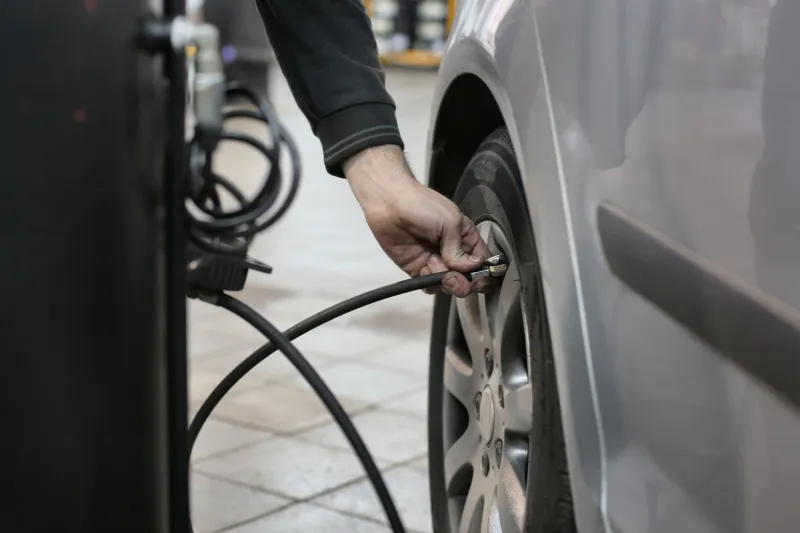
There is a particular ritual to a cold November morning in Britain. You scrape the windscreen, curse the leaf mulch in the gutter, and notice the tyre-pressure warning light has decided to join the conversation. Half a mile later you are queuing behind a van at the forecourt air machine, wrestling a coiled hose that looks like it has been used to tow a caravan.
The machine clicks, hisses, and tells you your tyres are fine. Except — are they? The chances are the number you just trusted was a polite fiction. Not because forecourt equipment is evil, but because warm tyres, tired gauges and a dash display with its own ideas can all conspire to give you a reading that is close enough to be believable and far enough out to matter.
The forecourt machine is not lying on purpose
Forecourt air machines live a hard life. They get dropped, frozen, overworked and generally treated like a public bike. Their built-in gauges drift, the hose loses a little pressure through leaks and kinks, and the calibration is rarely checked as often as you might hope. Add in a nozzle that does not seal perfectly against the valve, and you can easily be a couple of psi out before you have even started.
Then there is the warm-tyre problem. You have just driven to the forecourt, which means your tyres have been flexing, warming up and gaining pressure. A tyre that reads 32 psi after a ten-minute drive might have been closer to 29 psi when it was sitting on your driveway overnight. The air machine is not wrong in that moment — it is just answering a different question from the one you think you asked.
What your TPMS is really telling you
The tyre-pressure monitoring system on your dashboard is a useful early-warning tool, but it is not a precision instrument. Most systems have a tolerance of a few hundredths of a bar, and the warning threshold is often set well below the recommended pressure — sometimes around 25% low. By the time the light comes on, you are not slightly under-inflated. You are properly soft.
TPMS is also designed for safety, not for fine-tuning. It will notice a puncture or a slow leak, and it will nag you through a cold snap. What it will not do is tell you whether your front tyres are set for a full boot and three passengers, or whether the gauge on the forecourt was last calibrated when the machine still had a coin slot.
The door-pillar placard is the only number that matters
Every car has a tyre-pressure placard, usually on the driver's door pillar, sometimes inside the fuel-filler flap or the handbook. It lists the pressures for normal load and for a fully laden car. Those are the numbers you should be aiming for — not the maximum pressure moulded into the tyre sidewall, and not the number the previous owner scribbled on a bit of masking tape.
Pay attention to the load settings. A car with two people and a weekend bag does not need the same pressures as one carrying five adults and a boot full of luggage. The difference is usually a few psi at the rear, and it is there for a reason: more load means more heat and more sidewall flex. Ignoring the laden setting is one of the easiest ways to make a long motorway trip feel vague and floaty.
A simple cold-check routine
The best time to check your pressures is before you have driven anywhere. Overnight parking is ideal, because the tyres have had time to settle to ambient temperature. If you have to drive first, keep it short and gentle, and accept that the reading will be slightly high.
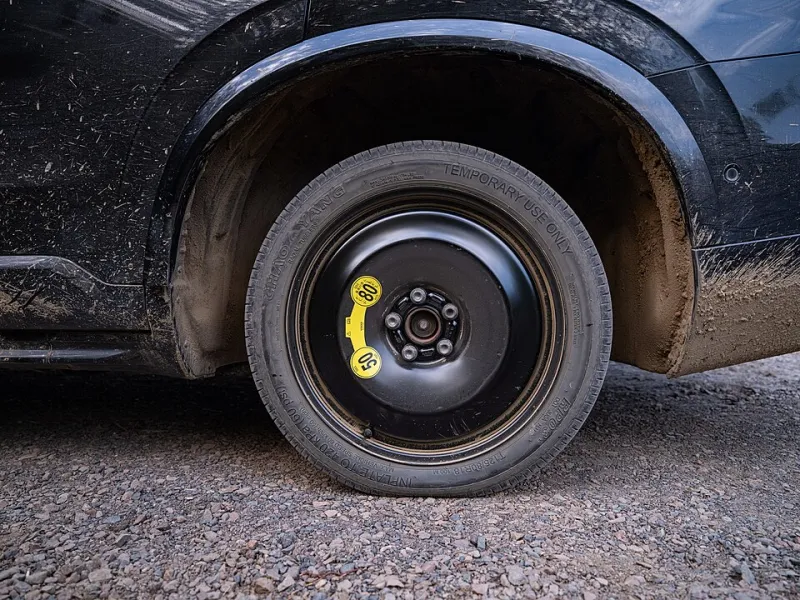
Use your own gauge. A decent pencil gauge or a small digital one costs less than a takeaway and lives happily in the glovebox. Check all four tyres, plus the spare if you have one, and write the numbers down. Adjust in small increments — 0.1 bar is about 1.5 psi — and recheck. Do not forget the valve caps; they keep grit and moisture out of the valve core, which is where slow leaks often begin.
If you are adding air at the forecourt, set the machine slightly above your target and then bleed down to the correct pressure with your own gauge. That way you are not relying on the machine's display for the final number.
When to add a little more — and when not to
Heavy loads and long motorway runs are the two situations where a small increase makes sense. Follow the placard's laden figures if you are carrying a full complement of passengers or a boot full of camping gear. For a long motorway trip in cold weather, some drivers add a couple of psi to the rear to compensate for heat build-up and load, but stay within the manufacturer's guidance.
What you should not do is overinflate in pursuit of fuel economy. A tyre pumped up like a football has a smaller contact patch, wears unevenly in the centre and can feel skittish in the wet. The fuel saving is marginal; the trade-off in grip and comfort is not.
Under-inflation is a quiet tax
Soft tyres are one of the most expensive habits in motoring, and they rarely announce themselves. They increase rolling resistance, which means the engine works harder and you buy more fuel. They wear the shoulders faster, so a set of tyres that should last 30,000 miles can be finished well before that. They generate more heat at motorway speed, which is exactly the condition where a neglected tyre is most likely to fail.
And then there is the handling. A car on under-inflated tyres turns in lazily, wanders slightly at speed and feels less settled over broken tarmac. In a British November, with wet leaves and greasy roundabouts, that margin matters.
Ten minutes, once a month
You do not need a workshop, a subscription or a degree in thermodynamics. You need a cold morning, a reliable gauge, the placard on your door pillar and ten minutes before you set off. Check the pressures, note them down, and adjust only what needs adjusting. Your tyres will wear more evenly, your fuel bill will be a little kinder, and the car will feel rather more like itself.
The forecourt machine can keep its polite fiction. You will be using a gauge that tells the truth.