Squeak, Smear, Repeat: The Five-Minute Wiper Check That Saves a November Morning
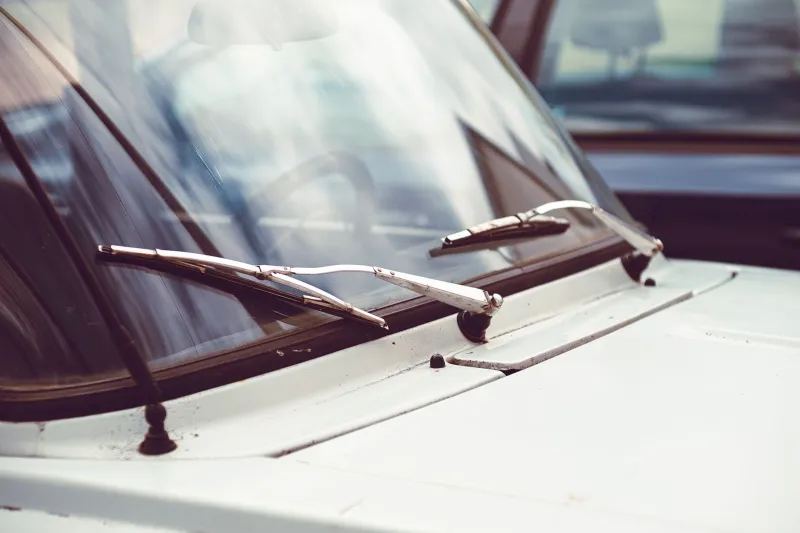
November 2026 is already doing what November does in Britain. The mornings are darker, the kerbs are leafier, and the first proper soaking is never far away. For most drivers, the windscreen wiper is the least glamorous bit of safety kit on the car. It sits there, gets used, and is expected to work. That is exactly why its decline is easy to miss. A blade rarely fails with a dramatic snap. It retires by degrees, leaving a film here and a judder there until you are peering through a smeared letterbox on the M6.
Before the rain settles in for the season, give the blades a proper look. It takes less time than boiling the kettle twice.
The quiet decline of a rubber edge
A new wiper blade has a crisp, flexible edge that squeegees water away in one clean pass. Over time, that edge faces sunlight, grit, frost, bird lime, screenwash and the general grime of British roads. The rubber hardens. Tiny nicks appear. The edge rounds off. The metal frame can lose tension or start to corrode, so the blade no longer presses evenly across the glass.
None of this happens overnight. That is the trap. You adapt without realising. A faint arc of water stays behind after each sweep. You lean forward at junctions. You tell yourself the screen is just a bit grimy. Then a lorry throws up a sheet of spray on the A14 and the wipers turn it into a milky haze rather than clearing it.
The streak test: wet, sweep, squat, stare
You do not need a garage or a special tool for this. Start with the screen wet. Use the washer jets, or a clean jug of water, and run the wipers for a single sweep. Switch them off. Now get out and look at the windscreen from outside, crouching slightly so you are viewing the glass at a low angle. A phone torch helps on a dull afternoon.
What you are looking for is a pattern. A few faint lines at the very edge of the sweep may be normal. A cluster of streaks in your line of sight is not. Note where they sit. Then clean the blade edge with a damp microfibre cloth and a little screenwash, and repeat the sweep. If the streaks disappear, you had contamination. If they remain in the same place, the rubber is worn or damaged.
While you are there, listen. Run the wipers at normal speed with the screen wet. A healthy blade should be quiet. A chatter, squeak or skip usually means the rubber has hardened, the arm is twisted, or the blade is not sitting flat. Clean first, then judge. Do not test wipers on a dry screen; it is noisy, misleading, and unkind to the glass.
What a worn blade actually looks like
Lift the wiper arm away from the screen gently. Do not let it snap back. Look along the rubber edge. A good blade has a sharp, continuous lip. A worn one may look glossy and hard, with a rounded edge, small splits, or chunks missing. Run a fingernail lightly along the rubber. It should feel supple, not like a brittle pencil eraser.
Check the frame and clips too. Rust around the metal claws, a loose joint, or a cracked plastic connector all point to replacement. On newer cars with flat or beam blades, the rubber can separate from the backing. On traditional blades, the refill may be perished even if the frame looks fine. If the blade has been on the car for more than a year and the screen never feels truly clear, treat it as a consumable and move on.
Why both blades, not just the driver's side
The driver's side gets the attention because it is the one directly in front of you. The passenger blade is quietly doing half the work. It clears the left-hand corner of the screen, which matters at junctions, roundabouts and when you are checking for pedestrians. A tired passenger blade can leave a smear right where you need a clear view.
There is also a simple arithmetic argument. Both blades have lived through the same weather, the same grit and the same UV. If one is worn, the other is close behind. Replacing only the driver's side means you will be back at the motor factors in a few weeks, and you will have spent more time and fuel than if you had bought a matched pair. Fit both, then keep the old passenger blade as a spare only if it is genuinely serviceable. Usually it is not.
Do not forget the rear wiper if your car has one. Hatchbacks and estates often rely on it in town traffic, and a rear blade that smears is just as annoying in a car park as a front one is on the motorway.
A UK routine that actually sticks
The easiest habit is to check the blades when you check the screenwash. In winter, use a proper concentrated screenwash at the strength recommended for the temperature, not a splash of summer mix. Clear frost and ice from the glass by hand before you set off; do not use the wipers as an ice scraper. That is how nicks begin.
Once a month, spend two minutes on the streak test. Before an MOT, give the blades a wash and a look. A tester will check that the wipers operate and clear the screen, and you do not want to be sorting a blade in the queue. If you park under trees, check more often. Sap and leaf grit accelerate wear.
The five-minute swap
Buy the correct blade sizes for your car. Check the handbook or measure the old blades, and note the fitting type, whether that is a hook, pin, bayonet or something more modern. Fit one side at a time so you can copy the orientation of the old blade. Lower the arm gently, run the wipers on a wet screen, and check for streaks and chatter. A new blade should clear the glass in a clean arc without drama.
Wipers are cheap compared with almost any other visibility component on the car. They are also one of the few parts you can genuinely improve in five minutes on a driveway. As November 2026 settles into its wet routine, do not wait for the first proper downpour to discover that your blades have already handed in their notice. Wet the screen, take a look, and replace the pair if the rubber is past its best. Your next rainy morning will be the proof.