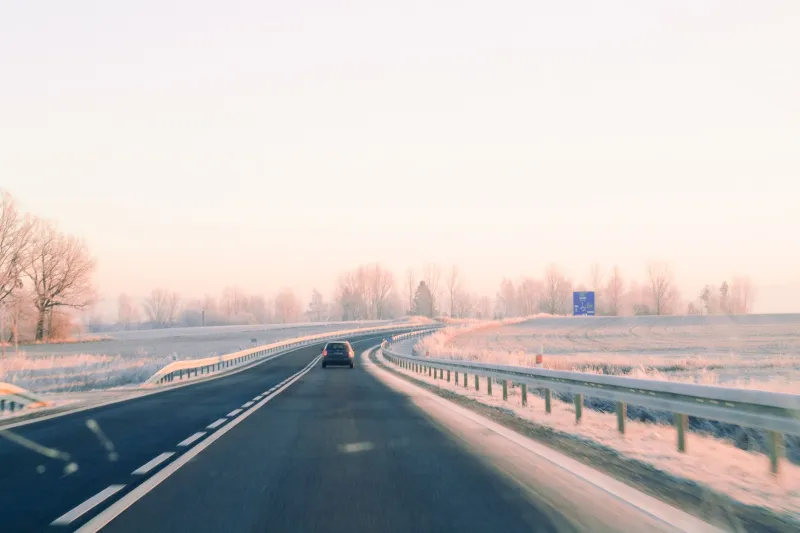
The 100-Metre Manners: Rear Fog Lights and the Art of Switching Off
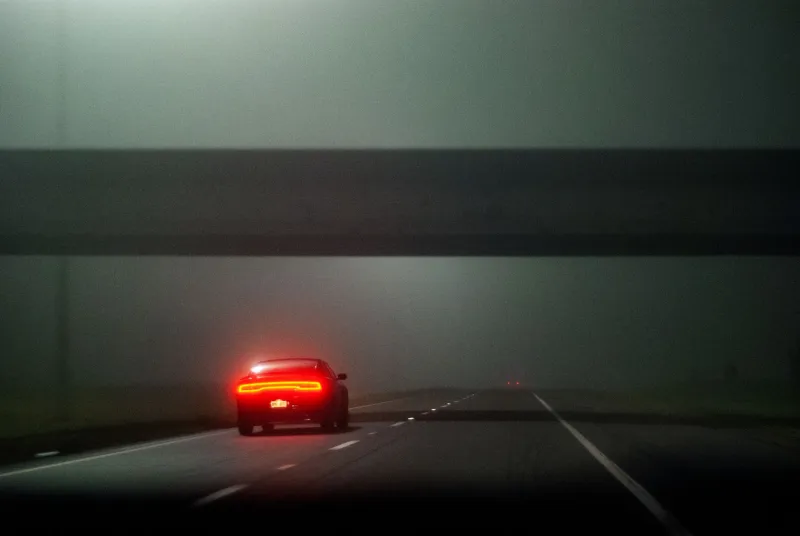
November has a way of making a mockery of the morning forecast. You leave in a murky half-light, the mist hanging over the ring road like a wet blanket, and the car in front is wearing a pair of red fog lamps so bright they could guide a ferry home. Then the fog lifts, the traffic bunches, and those lamps stay on. And on. And on.
Rear fog lights are one of those controls that sit somewhere between genuinely useful and quietly antisocial. Used properly, they make your car visible when visibility is truly rubbish. Used lazily, they turn you into a mobile glare source and, in some conditions, make it harder for the driver behind to see your brake lights. So as the dark, damp mornings settle in, it is worth getting the switch, the telltale and the bulbs sorted before the fog does the asking.
What the law actually says
In the UK, the Highway Code is clear enough. Rule 226 says you must use headlights when visibility is seriously reduced, generally when you cannot see for more than 100 metres. You may also use front or rear fog lights in those conditions, but you must switch them off when visibility improves.
Rule 236 goes further: you must not use front or rear fog lights unless visibility is seriously reduced, because they dazzle other road users and can obscure your brake lights. Again, off when conditions improve.
That 100-metre figure is a useful practical benchmark, not a magic number to be measured with a tape. If you can see the car in front clearly, and the road ahead has decent depth, your rear fog lamps probably do not need to be on. If the world has shrunk to a grey soup and the next set of tail lights is a vague smudge, they earn their place. The point is that the switch is for a condition, not a season.
The telltale is not a trophy
The most common rear fog light problem is not a blown bulb. It is a driver who has forgotten the switch is on. The dashboard telltale is usually an amber lamp symbol with rays pointing away from it, and it should be obvious. But after a few miles, the mind filters it out along with the low-fuel light and the passenger's podcast.
Make a habit of glancing at it when conditions change. Fog lifts, rain stops, you join a lit motorway, the queue slows to walking pace: these are all moments to check. If the telltale is still glowing and you can see more than a couple of car lengths, turn it off. No ceremony required.
It is also worth knowing exactly where the switch lives before you need it. On some cars it is a rotary collar on the indicator stalk, on others a button near the headlight dial, and on a growing number it is buried in a touchscreen menu. Learn the sequence in daylight, not while peering through a misted windscreen at a roundabout.
Rain is not fog, and spray is a liar
Heavy rain can reduce visibility, but it is not automatically a rear fog light occasion. Fog lamps are designed to cut through suspended droplets in a way that ordinary lamps cannot, but in rain they can bounce light back at the driver behind and make your rear end a confusing red blur. Motorway spray is the classic trap: the road ahead looks awful, so on go the fogs, and suddenly half the traffic is wearing them.
If visibility is genuinely down to the 100-metre sort of range, use them. If you are simply in a downpour with decent forward vision, rely on dipped headlights and leave the fog switch alone. And do not use rear fog lights as a substitute for headlights. They are an addition, not a replacement.
The five-minute pre-fog check
Before the next properly foggy morning, give the system a quick once-over. You do not need a garage bay or a diagnostic computer for most of it.
First, with the ignition on and the lights switched on, press or twist the rear fog switch. Walk round to the back of the car and check the lamp or lamps. Some cars have a single rear fog light on the offside; others have two. If one is out, it can look like a brake-light fault to the driver behind, so sort it.
Second, check the telltale on the dash. If the switch clicks but nothing lights up, you may have a blown bulb, a fuse issue or a switch that has given up. LED units may need a garage, but a conventional bulb is usually a straightforward fix.
Third, give the lens a wipe. A grimy rear fog lamp is a bit like a foghorn with a sock in it: technically working, practically useless. A damp cloth is enough; avoid anything abrasive on plastic lenses.
Finally, check your brake lights at the same time. The whole point of switching fog lights off when visibility improves is to keep your brake lights clear and obvious. If one of those is out, fix it before the fog gives you a reason to care.
Queue etiquette and the gentle art of switching off
Here is where the social side comes in. In slow-moving traffic, a rear fog light can be genuinely painful for the person behind. It is not a personal attack, but it can feel like one at 7am. If you are stationary or crawling and the driver behind is close enough to read your tax disc, ask yourself whether the fog is still seriously reducing visibility. If it is not, switch off.
If it is still thick fog, keep them on and drive to the conditions. The law and common sense are on your side. But the moment the murk lifts, or you turn onto a lit road with clear sightlines, the switch should go off. That is the whole etiquette in one sentence: use them for the fog, not for the feeling of being seen.
And if someone flashes you from behind, resist the urge to assume they are warning you about a speed trap. Check your telltale first. There is a fair chance you are the one broadcasting red light across three lanes.
A small switch, a big signal
Rear fog lights are not a badge of hardiness. They are a safety tool with a narrow job: making your car visible when visibility is seriously reduced. Used well, they are brilliant. Left on, they are a distraction, a dazzle risk and a small but telling sign that the driver has stopped paying attention to the conditions.
So before November does its worst, find the switch, test the bulbs, learn the telltale and practise switching off. It is a ten-second habit that makes the morning commute a little calmer for everyone behind you. And in fog, calm is worth more than brightness.