When the Road Disappears: Judging a Flooded Lane Without Gambling Your Engine
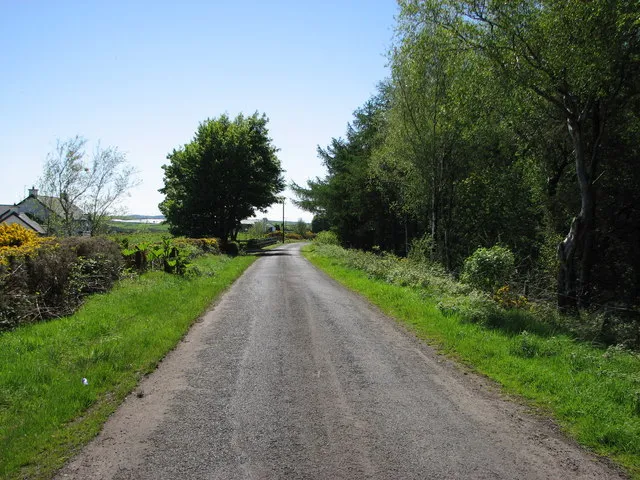
Photo: Willie Duffin, CC BY-SA 2.0, via Wikimedia Commons
UK winter rain has a way of turning a familiar B-road into a brown lake with a hedge in the middle. The temptation is to keep going because the car in front did, or because reversing feels silly. But standing water is one of the few everyday hazards that can write off an engine in a couple of seconds. Hydrolock — water drawn into the air intake and compressed in a cylinder — does not need a deep flood. It needs the wrong depth at the wrong speed. Here is how to make the call without turning a soggy morning into a recovery truck.
The two-second rule that is not about following distance
Before you judge depth, judge the road. Is the water moving? Is there a kerb or verge you can use as a ruler? Can you see the exit, or is the far side hidden by a bend? Is there debris, a manhole cover or a field gate emptying into the lane? If the water is flowing quickly, if you cannot see the bottom, or if a lorry is about to arrive and push a wave your way, the answer is usually no. A detour is not a defeat; it is a maintenance decision.
Where your engine breathes
Air intakes sit at different heights. Some are behind the grille, some in an inner wing, and some are lower than the owner imagines. Do not assume that a tall car is a submarine, and do not trust the badge on the back. Check your handbook for the wading depth, then treat that figure as a limit rather than a target. The intake is the number that matters, and it is often lower than the bottom of the headlights.
Why a bow wave can be kinder than a crawl
In shallow, still water with a firm base and a clear exit, a steady pace can create a gentle bow wave that keeps the worst of the water from climbing the grille. A slow crawl can let water creep up to the intake and stall you in the middle of the lake. That is the theory, and it is why some drivers swear by the bow wave. The catch is that it only works when the water is genuinely shallow, the exit is visible and you are not soaking someone's garden or blinding an oncoming driver. It is not a licence to blast through a flood. If the water is deep enough to worry you, the bow wave will not save you.
The depth you can actually trust
Use the wheels as a ruler. If the water is below the bottom of the wheel, many cars will cope with a careful pass. If it is above the centre of the wheel, think very hard. If it is near the bottom of the doors or the bumper, stop. Local ford signs and depth gauges are there for a reason. Moving water is worse than still water, and a road that was passable ten minutes ago can be a different proposition after another burst of rain.
If you go: the slow, steady, no-second-guess method
Pick the shallowest line, keep to the crown if it is safe, leave a big gap to the car in front and use first gear with a steady throttle. Do not change gear, do not stop, and do not lift off halfway through. If the engine stumbles or the water rises, do not restart it if it stalls. Get out, get safe and call for help. Water in the intake is an engine-off event, not a moment for optimism.
After the water: brakes, bearings, electrics
Once you are through, test the brakes gently. Wet brakes pull and grab until they dry, so apply light pressure for a few seconds while moving slowly. Listen for a grinding or humming noise from the wheel bearings, and check that the lights, horn, windows and wipers still work. If the water was high enough to reach the bumper, have the air filter and oil checked. If the car stalled in the flood, do not start it to see if it is fine. That is how a cheap morning becomes an expensive engine.
The reverse option is not a defeat
Reversing out of a flooded lane is often the most sensible thing you will do all week. If you cannot see the exit, if the water is moving, or if the depth is unclear, turn around and find another route. A twenty-minute detour costs less than an engine, a recovery truck and an insurance claim. CareCars would rather you arrived late than arrived with a hydrolocked engine and a story about the car in front.