Your Air-Con Is a Winter Tool, Not a Summer Treat
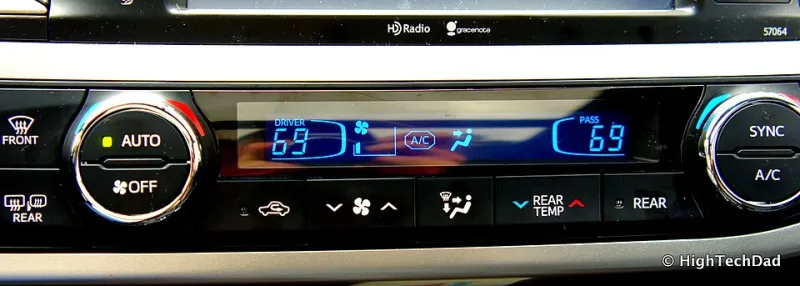
Photo: Michael Sheehan, CC BY 2.0, via Wikimedia Commons
Ask a dozen drivers what the air-conditioning is for and most will say hot weather. It's an understandable answer, and a wrong one. The system's most useful work in Britain happens in the cold, wet, fuggy months — the ones where the inside of your windscreen turns opaque before you've reached the end of the street.
Treat it as a summer luxury and it'll behave like one: sulky in June, expensive to revive, and no help at all when you actually need it.
What the button is really doing
Air-conditioning doesn't just chill air. As the air passes over the evaporator, moisture condenses out of it and drains away underneath the car. What comes out of the vents is drier than what went in, and dry air clears a misted screen dramatically faster than warm damp air ever will.
That's why so many cars switch the air-con on automatically when you select the front demist setting. It's not a quirk or a fault. If you habitually press the button off because you associate it with July, you're disabling the single most effective demisting tool you own.
The seals argument
Refrigerant carries lubricating oil around the system as it circulates. When the compressor sits idle for months on end — which is exactly what happens to a car whose owner only uses air-con in a heatwave — the seals can dry and shrink, and refrigerant slowly escapes past them.
The result arrives later, usually as a mild spring and a system that's merely cool rather than cold, followed by a recharge bill. Running the system regularly keeps oil moving through the seals and is the cheapest possible insurance.
The monthly walk
Once a month, ideally on a run of at least ten minutes rather than idling on the drive:
- Start the car as normal.
- Select the windscreen demist setting and make sure the air-con indicator is lit.
- Set the temperature to something mid-range, not maximum cold. You want the compressor working, not the cabin turned into a chiller.
- Put the fan on at least half speed.
- Use fresh air rather than recirculation — you're trying to dry the cabin, not recycle its moisture.
- Let it run for five to ten minutes while you drive.
Then, before you switch off, run the fan without the air-con for a minute or two. It blows moisture off the evaporator, which is where the smells come from.
Two small housekeeping points. Many cars have an eco mode that quietly disables the compressor — check it hasn't. And if your car has climate control, leaving it in auto all year is genuinely the easiest way to keep the system exercised.
The fuel question
Yes, it costs fuel. The compressor is driven by the engine, so it places a load on it. Expect a few per cent extra in typical use — more noticeable in stop-start town driving, less so at motorway speeds where aerodynamic drag dominates the fuel bill.
Against that, consider what you're buying: a screen that clears in seconds rather than minutes, and a system that doesn't need recharging every spring. On a wet November morning, with the heater blowing and the traffic crawling, running the air-con is one of the better value decisions available to you.
Smells, damp and the filter
A faint musty whiff when you first switch on is usually bacteria and fungus enjoying the damp evaporator, or a cabin filter that's past its best. The filter is cheap and often easy to reach behind the glovebox — worth checking once a year, particularly if you park under trees.
If a new filter doesn't shift the smell, a professional antibacterial clean of the evaporator is the next step, and it's cheaper than you'd think. Water pooling under the car on a humid day is normal: that's the moisture the system has just removed from the cabin.
When it needs a service, not another blast
Some problems won't be solved by running it more often:
- Weak cooling on a genuinely warm day, or air that never gets properly cold.
- A compressor that clicks, cycles rapidly or doesn't engage at all.
- A flashing or flickering air-con light on the dashboard.
- A musty smell that survives a new cabin filter.
- Screens that mist and won't clear, even with the demist setting on.
Refrigerant does escape slowly even from a healthy system, so a recharge roughly every couple of years is normal. A system that needs gas every few months has a leak, and the answer is to find and fix it rather than top it up endlessly. Be aware that the newer R1234yf refrigerant used in many cars since the mid-2010s costs noticeably more than the older R134a, so it's worth knowing which your car takes before you ring around for quotes.
The habit, in one line
Once a month, demist setting, air-con on, ten minutes of driving. That's the whole routine. It costs a few pence in fuel, it keeps the seals wet, it clears your glass on the mornings that matter, and it means June doesn't arrive with a nasty surprise attached.