Crater Economics: What a Pothole Actually Costs You, and How to Push Back
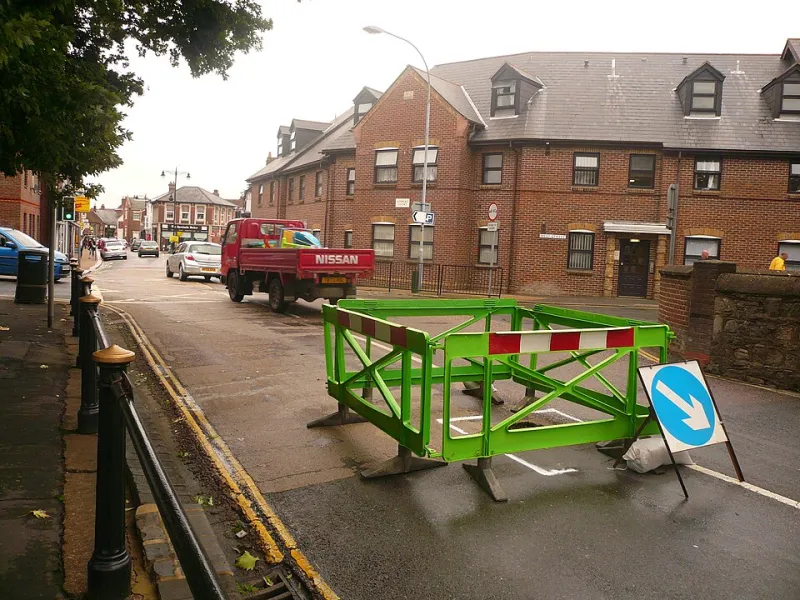
Photo: Editor5807, CC BY 3.0, via Wikimedia Commons
Every November the same thing happens. The roads get wet, the surface breaks up, and drivers start paying a tax that nobody voted for. A new tyre here, a buckled alloy there, a tracking bill that shows up six weeks later as a bald shoulder on the outside edge.
We're told to drive around them. Fine, up to a point. But there's a difference between being a careful driver and quietly accepting that a crater in the A-road is your financial responsibility.
The five minutes at the roadside that decide everything
Most pothole claims fail on evidence, not on merit. If you hit one and the tyre's gone flat, pull over somewhere safe, hazards on, and do this before you do anything else.
- Photograph the hole itself, with something for scale. A tape measure is ideal, a foot or a phone will do. Without scale, the argument becomes 'a shallow depression' versus 'a crater'.
- Photograph the damage — the sidewall bulge, the split, the dented rim — before anything is moved or repaired.
- Photograph the wider scene so the location is unmistakable: road markings, a street sign, a junction, a house number. A tight close-up of tarmac proves nothing about where it is.
- Note the time, date, direction of travel and weather. Wet roads make potholes harder to see, and that's relevant.
- Save the dashcam clip immediately. Most cameras overwrite within hours. Don't find out the hard way.
- Get the exact location — a what3words reference or grid reference is worth more than 'somewhere near the retail park'.
- Take witness details if anyone stopped. Two accounts are better than one.
Then report the hole, even if you don't intend to claim. Council portals and FixMyStreet both work, and a report creates a timestamp. Two useful things happen: someone might actually fill it, and the next driver's claim gets easier.
What actually breaks
A pothole hit is rarely just a tyre. A sidewall bulge or a pinch cut cannot be repaired — that tyre is scrap, whatever the tread depth. A tread puncture near the shoulder is usually the same story. Buckled alloys can sometimes be straightened; cracked ones generally can't.
Then there's what you can't see. Bent suspension components, a bruised wheel bearing, and tracking knocked out of alignment. That last one is the silent cost: you pay for a tyre today and the same tyre again in eight months because the geometry is off. If you've taken a proper thump, get the alignment checked and keep the receipt.
How the claim actually works
Submit the claim to the highway authority responsible for that road — county, unitary or borough council, or in some cases National Highways. Include your photos, a repair invoice or two quotes, the location, and the date.
Here's the bit that surprises people. Councils don't simply pay out for damage. Under section 58 of the Highways Act 1980 in England and Wales, they have a statutory defence if they can show they had a reasonable system of inspection and repair in place. Scotland works on a similar principle under its own roads legislation. In practice, the question becomes: was this hole already known about, how long had it been there, and when was that stretch last inspected?
So ask. Request the inspection and maintenance records for that section of road covering the weeks before your incident. Some councils hand them over on request; a freedom of information request is the fallback. If the hole had been reported three times and nothing happened, that's your case. If it was logged and filled within their published timescale, you'll probably be politely declined — and you'll at least know why.
Expect it to take weeks, sometimes months. If the offer is refused and you're confident, the small claims track is designed for exactly this sort of dispute and doesn't require a solicitor. The fee is modest and the process is deliberately informal.
One caution: go through the council, not your insurer, unless you have to. A £120 tyre on a £350 excess is pure loss, and even an enquiry can have a habit of following you around at renewal.
When to write it off
Be honest about the numbers. A £95 tyre, no dashcam, no scale photo, no clear location? The hours you'll spend will cost more than the tyre. A £480 bill covering a wheel, tyre, alignment and a bent track rod end, with sharp photographs and a report already logged? That's worth pursuing.
Treat the claim as a small project with a break-even point, not a moral crusade. And do the cheap things regardless: report the hole, keep a torch in the car, and check your tyre pressures monthly, because a soft tyre is far more likely to be destroyed by the same impact that a correctly inflated one shrugs off.
'Just avoid them' is not a maintenance plan
The line you hear most often is that drivers should simply steer around the worst of it. Swerving around a crater at 50mph on a wet road, into the path of a cyclist or the oncoming lane, is not a safety strategy — it's a different hazard.
Roads are shared infrastructure and their condition is somebody's job. Reporting every hole you hit is the cheapest form of pothole prevention available to you: it establishes a record, it sets a clock running on the council's repair obligations, and it makes somebody's 'we weren't aware of it' defence a bit harder to run next time.
A sensible sidewall helps, too. If you're choosing tyres on a car that lives on indifferent B-roads, a slightly taller profile and a decent load rating will survive more than a rubber band on a 20-inch rim. Not glamorous, but neither is a £400 wheel.
Cope with the craters. Complain about them properly. And claim when the numbers make sense — because absorbing the bill in silence just trains everyone to keep charging it.